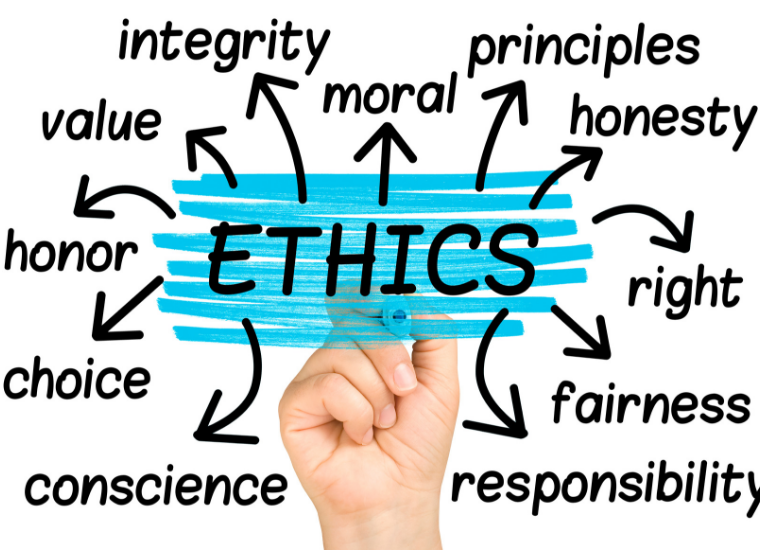
Ethics of documentaries

 What is the definition of ethics:

The discipline of dealing with what is good and bad, with moral duty and obligation. A standard of principles determined by an individual.

Documentary makers do have a set of morals referred to as the code of ethics. These are a set of principles to keep their integrity intact. A couple of examples of these codes include: The director must not interfere with the subject's life path, subjects may not be paid for their use in the film, and all parties involved in the film must be given the opportunity to represent themself. 

The Jink is renowned for serious controversy in ethics when it was found the director hid evidence against Robert Durst. However many people found outside the film world that they violated the world. Robert Durst was convicted and arrested due to this documentary. Documentary is often very biased and always aims to create an emotion. The subjects themselves give the right to film them, therefore it is not unethical.

'The person behind the camera is just as important as the person in front of the camera. A subject-filmmaker relationship is crucial. Unlike fiction films where every inch of it is manipulated and crafted to whatever the director wants, documentary films are open-ended and inconclusive and more in touch with society, and document the present world; the good and the bad, and how we can change the world.


https://www.youtube.com/watch?v=EEuMExQoj74&t=424s


Comments

Popular posts from this blog

Codes and conventions of documentary

Codes and conventions of documentary

Preliminary task: editing using Premiere Pro

 Although I have already decided that for my preliminary task, I will be editing using Davinci Resolve due to it being more accessible, while I'm at school, I decided to edit the preliminary task with Premiere Pro as well just to compare the results.                                           I used Premiere Pro last year to edit my tasks but in my opinion, I found it far harder to use than Davinci Resolve, however now I am getting more comfortable with this software and would like to start using it more by practicing on it.

Preliminary task: reflection and evaluation

What went well? In my preliminary task, I believe there were many things that went well, one being the positioning of my interviewee. I deliberately placed the interviewee off the center to make it feel more like a conversation, creating an open atmosphere for the interview. I also believe that during the later stages of my preliminary task, I really hit my target of the kind of topics that I want to discuss and raise awareness for in my interview; such as the struggle of loneliness for young men. What didn't go so well? I believe the technical side of my interview wasn't as sophisticated as I would like it to be, this is mainly down to time constraints, as I am a boarder at college, and I only have limited time to film with people outside of college. I also feel as if some of my interviews didn't really correlate to my topic as much as I would like them to have. What have I learned/ what will I do in my final task differently? In my final draft, I will continue the idea of...